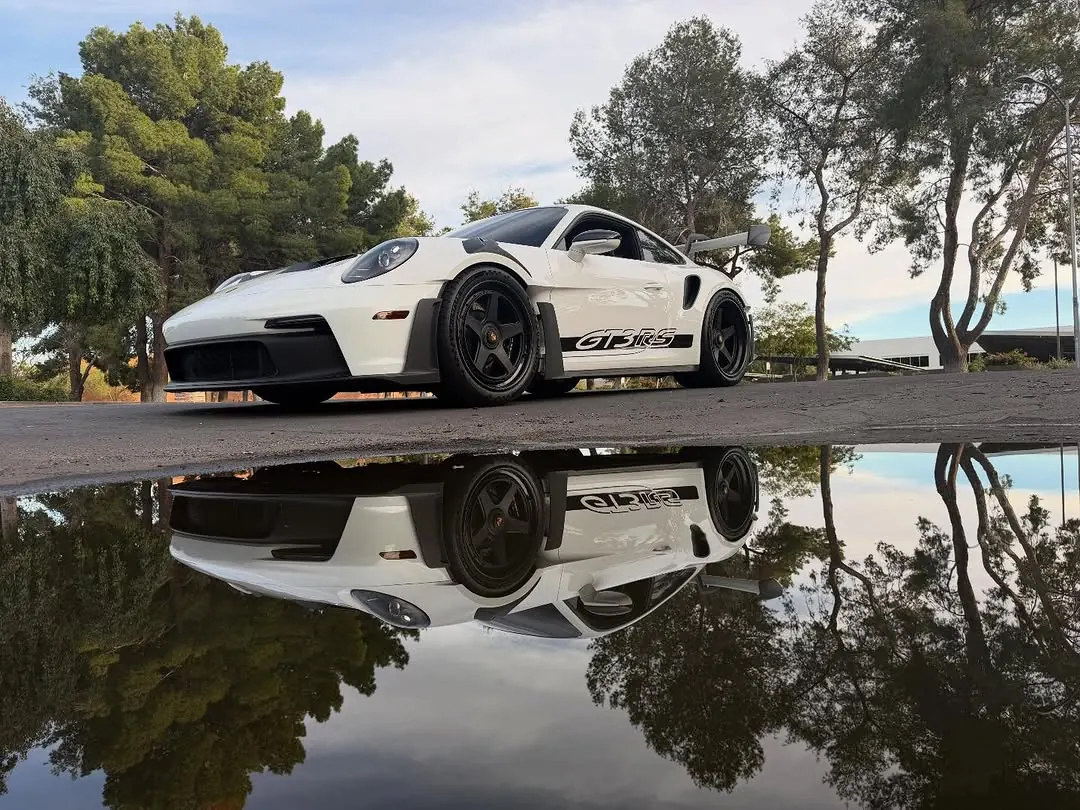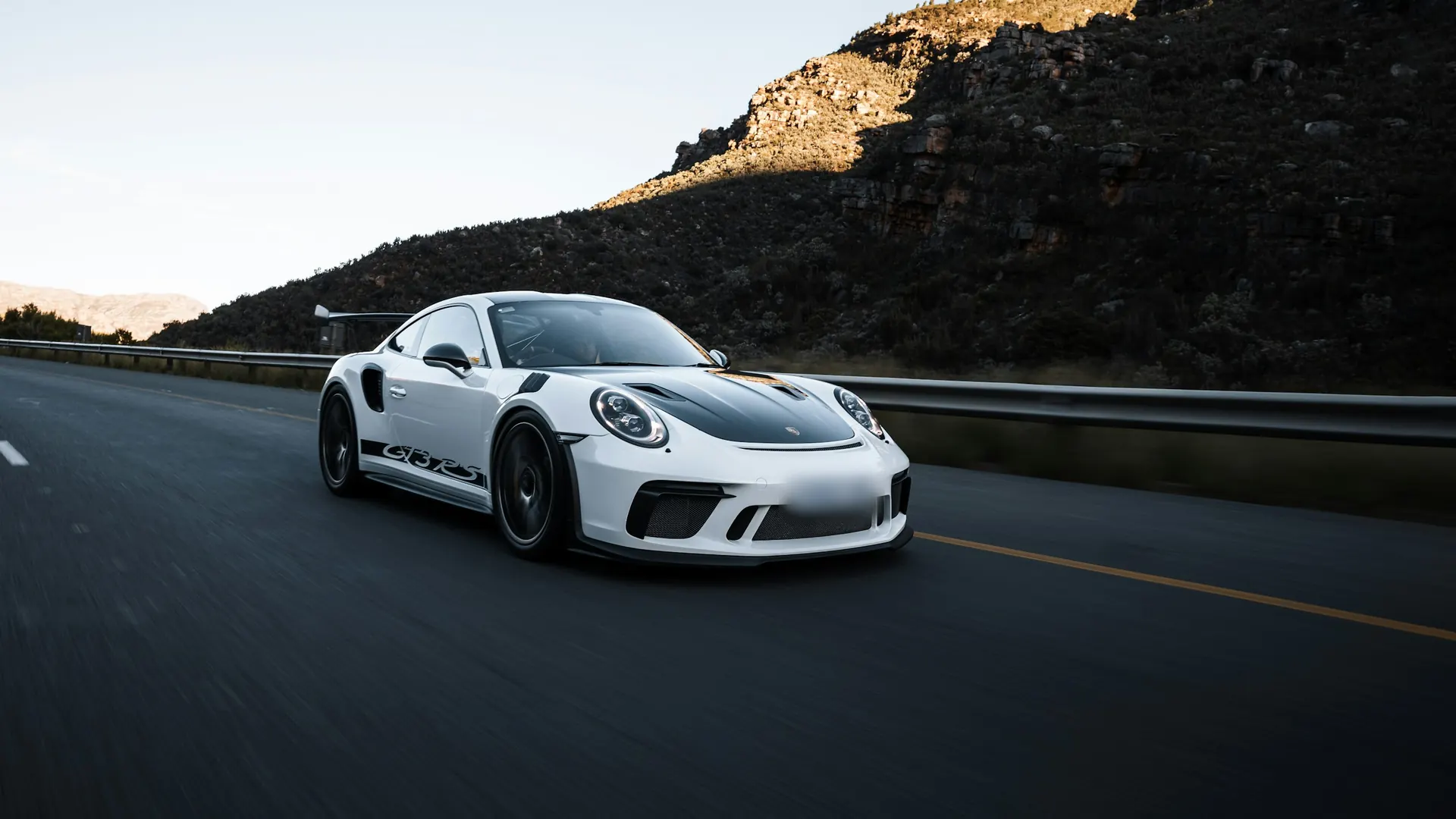
Plus Plus Calibration delivers custom Porsche ECU and TCU tuning for owners across the United States, covering the modern Porsche lineup — from the twin-turbo 991.2 and 992 Turbo S to the GT3’s 9,000-RPM 4.0-liter flat-six. In our shop, calibrations are developed on our dyno, verified with full data logging and delivered with before-and-after documentation, so you know exactly what your car picked up. For most modern Porsches you can also order a Stage 1 or Stage 2 tune online and mail us the ECU.
A short history of Porsche performance
Porsche built its reputation on turbocharging long before it was common. The first 911 was shown in 1963, and the 911 Turbo followed in 1975, bringing a turbocharged flat-six to a road car at a time when few manufacturers offered one. The PDK dual-clutch gearbox, refined in Porsche’s racing programs, arrived in the 911 in 2008.
In 2016 the 991.2 generation moved the 911 Carrera to a twin-turbo 3.0-liter flat-six, while the GT3 kept a high-revving, naturally aspirated engine. Today’s range spans the 992-generation 911, the 718 Boxster and Cayman, and the Cayenne, Panamera and Macan: turbocharged engines and dual-clutch gearboxes that each need their own calibration approach.
Porsche platforms we tune
Our calibration work covers the full modern Porsche range. The platforms we see most in the shop:
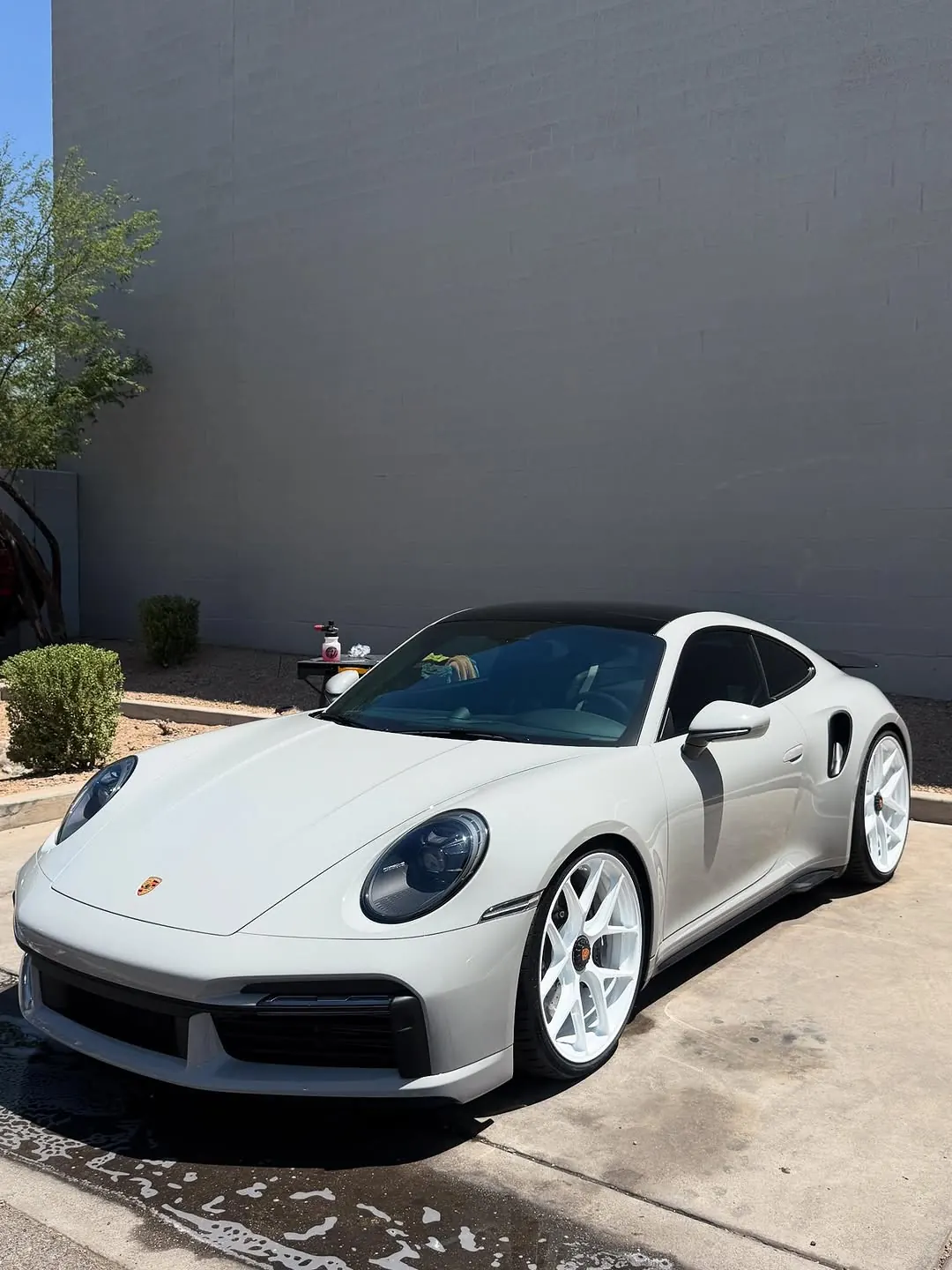
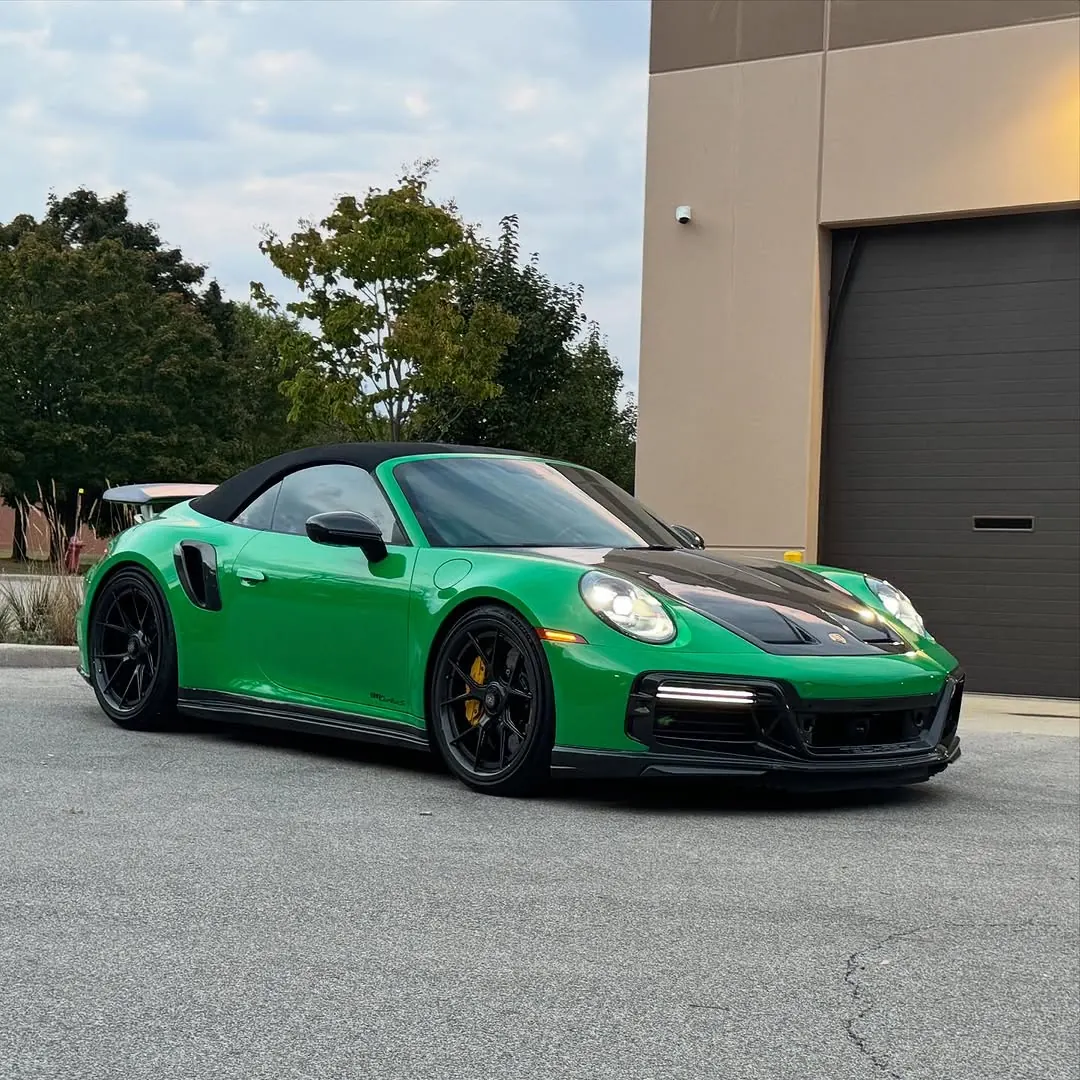
- 911 Turbo and Turbo S (991.2, 992) — twin-turbo 3.8-liter flat-six, and the strongest Porsche platform for combined ECU and TCU work.
- 911 Carrera T, S and GTS (991.2, 992) — twin-turbo 3.0-liter flat-six. An excellent tuning platform with meaningful gains from the ECU alone.
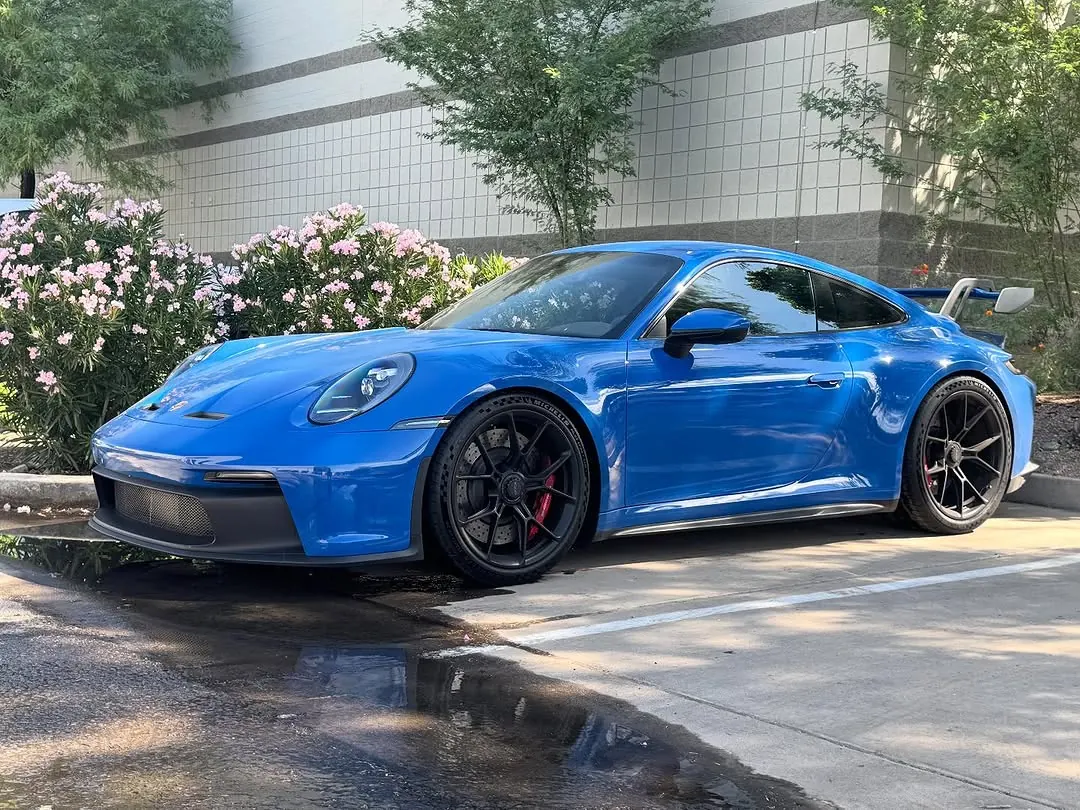
- 911 GT3 and GT3 RS (991.2, 992) — naturally aspirated 4.0-liter. Calibration sharpens throttle response, refines the rev limit to safe thresholds and dials in cam timing.
- Cayenne Turbo, Turbo GT and Turbo S E-Hybrid — 4.0-liter twin-turbo V8. Strong Stage 1 gains, plus TCU tuning for firmer shifts and clutch clamping.
- Panamera Turbo and Turbo S E-Hybrid — the same V8 architecture as the Cayenne Turbo, with excellent calibration headroom.
- Macan GTS and Macan Turbo — a V6 biturbo platform with substantial untapped power.
- 718 Cayman and Boxster GTS 4.0, GT4, GT4 RS and Spyder RS — naturally aspirated flat-six.
Stage 1 Porsche ECU tune
Our Stage 1 Porsche calibration is developed for stock hardware running pump 91 or 93 octane. We remap ignition timing, boost targets, torque limiters and cam phasing to extract the maximum safe power the factory exhaust and intercoolers can support, with the biggest improvements in the mid-range, where factory tuning is conservative for emissions and longevity targets.
In our online catalog, a 2024 911 Turbo S (992.1) goes from 641 hp to 800 hp at Stage 1. Stage 1 tunes done in our shop come with a pump-gas calibration and a track-gas (E30 or 100-octane) option where the platform supports flex fuel.
Stage 2 Porsche ECU tune with bolt-ons
Stage 2 is where the 911 Turbo and Cayenne Turbo platforms really wake up. With high-flow downpipes, upgraded intercoolers and, in some cases, a cold-air intake, the limit on stock turbochargers becomes fuel system capacity and clutch pack torque tolerance. Our catalog lists the same 911 Turbo S at 850 hp at Stage 2.
For track-focused builds we recommend pairing Stage 2 with a PDK TCU tune to raise the torque limits and tighten shift logic, since the stock TCU will otherwise clamp power delivery to protect the transmission.
Porsche PDK TCU tuning
Porsche’s PDK is one of the strongest dual-clutch transmissions ever produced, but the factory programming is intentionally conservative on clutch clamping pressure and shift firmness. Our PDK TCU calibration raises clutch pressures to eliminate slip under boost, tightens shift timing, adjusts kick-down thresholds and raises the torque ceiling so the ECU no longer pulls timing to protect the transmission.
The result is sharper, more aggressive shifts that feel like the PDK you always wanted, and the ability to run Stage 2 power levels without slipping. A TCU tune can be added to most Porsche tunes in our online catalog.
E85 flex-fuel Porsche builds
Several Porsche platforms can safely run E85 with a properly developed calibration and supporting hardware. In our shop we build dedicated E85 flex-fuel maps for the 911 Turbo, Cayenne Turbo and Macan Turbo, using ethanol’s higher knock resistance and cooling to substantially raise boost targets and ignition timing. Flex-fuel builds are custom work — contact us to plan one.
What Porsche owners get in our shop
Every Porsche we tune in our shop leaves with dyno sheets documenting stock and tuned horsepower and torque across the RPM range, a full data log showing air-fuel ratios, knock counts and boost pressure under load, a written summary of every calibration change, and a road-drive verification to confirm drivability. We can typically complete a Stage 1 tune in a single day, and for out-of-town clients we coordinate hotel recommendations in north Phoenix.